AI Strategy

The Architect's Illusion

Why isolated tool adoption destroys your AI ROI – and how to avoid the trap of fragmented implementation.

Reading time: approx. 8 minutes | Article 1 of 4

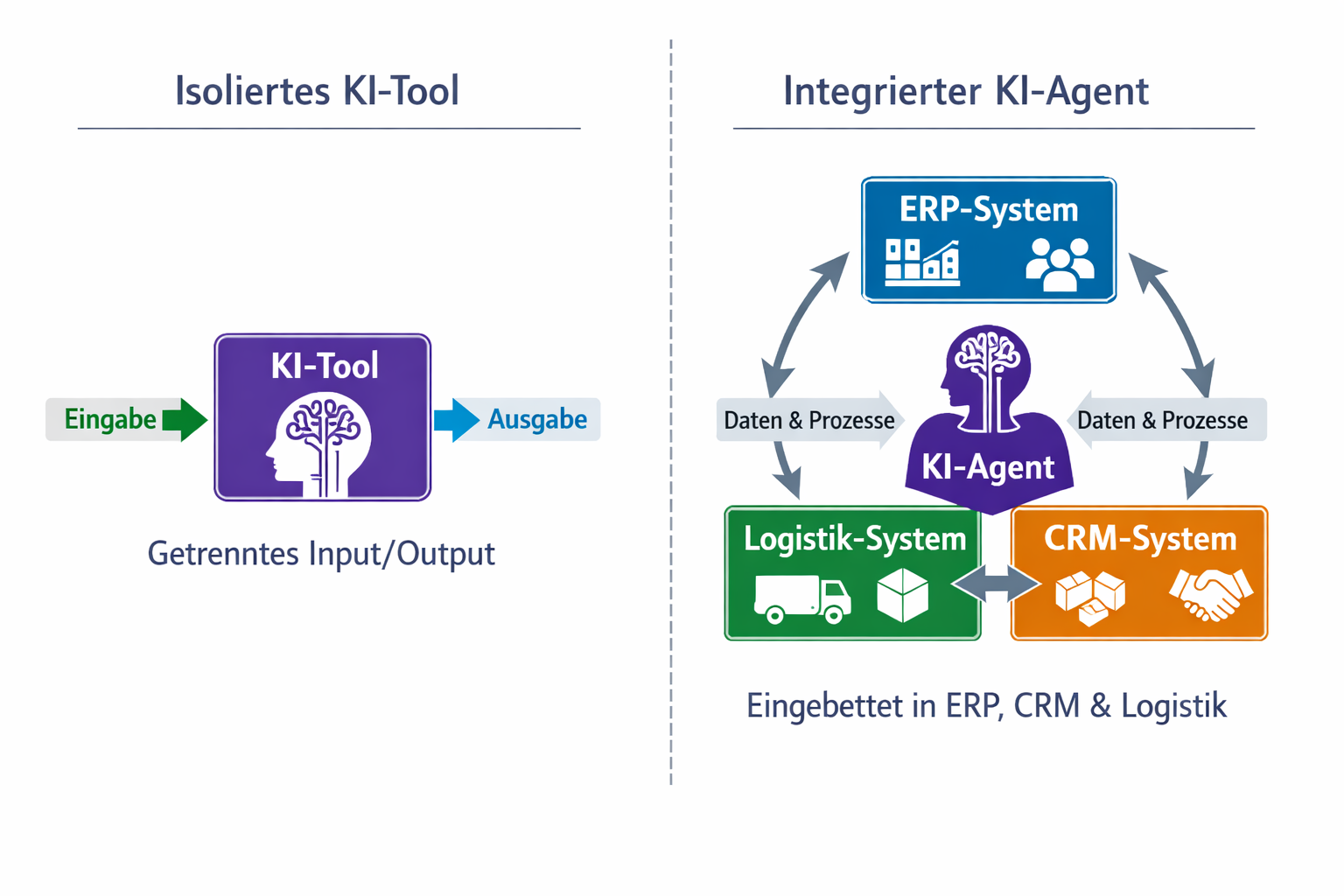
Isolated AI tools vs. integrated agent architecture

Executive Summary

Uncoordinated AI tool adoption creates new knowledge silos instead of generating synergies. Current diagnostics reveal: Those who view AI as an isolated tool rather than an architectural challenge don't digitize success – they cement organizational chaos.

The market is dominated by a paradoxical dynamic. While technology vendors proclaim productivity breakthroughs, empirical evidence paints a sobering picture: Approximately 95 percent of generative AI pilot projects in enterprises fail to achieve measurable ROI.

This figure from an MIT study doesn't indicate a weakness in the technology. It's the result of failed implementation strategy. Those who neglect architectural integration burn capital in fragmented structures.


The Anatomy of Failure: From Pilot Tunnel Vision to Silos

The pattern of failure is technology-driven and follows a risky logic. Companies frequently initiate AI projects from the desire to imitate competitors.

Pilot project vs. scaling - the typical trajectory

Pilot projects succeed in the lab, fail at scale

A typical project trajectory: It starts with a pilot project in a narrowly defined area. These isolated experiments deliver impressive results because they're based on small, manually curated datasets.

The strategic disaster begins at scaling. As soon as the system needs to be transferred to the entire organization, the island solution collides with the reality of a fragmented data landscape.

The IW Cologne Figures

Surveys by the German Economic Institute underscore this fragmentation:

  • 37 percent of German companies use AI
  • Adoption is predominantly point-based
  • Only 2.2 percent have integrated AI across all relevant areas

This digital fragmentation prevents data flow and blocks cross-departmental efficiency gains.

The Operational Cost Trap: More Work Through Automation

The consequences of this fragmentation directly impact operational efficiency. An instructive example comes from convention sales in the hospitality industry.

Investments in AI tools are meant to generate productivity here. But without deep integration into Property Management Systems (PMS) or Customer Relationship Management (CRM), a systemic break occurs. Employees must switch between applications, manually transfer data, and consolidate results.

The Biggest ROI Isn't in Tool Adoption

According to the study "The GenAI Divide," the biggest ROI doesn't lie in mere tool adoption, but in back-office automation and deep integration into core processes. MIT describes this as the "Learning Gap": Systems without connection to a central data truth are incapable of learning.

The Shadow AI Problem

Additionally, "Shadow AI" exacerbates the problem:

  • Only about 40 percent of companies have official AI licenses
  • In over 90 percent of cases, employees use private tools like ChatGPT

This decentralized usage creates a massive dark figure of data silos. Insights don't flow back into organizational memory. The company loses sovereignty over its accumulated knowledge as well as control over security and compliance risks.

Data Governance as Architectural Foundation

AI implementation isn't a software update – it's a transformation of information architecture.

Analyses by Atlan show that companies primarily fail at steering AI in operational deployment. In decentralized models where each business unit decides autonomously, oversight of existing data is lost. The resulting metric inconsistencies make it impossible to successfully train models at the enterprise level.

Networked systems as the basis for AI integration

Networked architecture instead of isolated silos

The Solution: Federated Models

The solution lies in federated models that combine central guardrails with domain-specific execution. Without a conscious decision for a governance model, AI inevitably leads to chaos.

Deloitte states: Siloed platforms and poor data quality are the biggest obstacles to measurable ROI. AI doesn't compensate for architectural weaknesses – it exposes them.

Agentic AI: The Ultimate Integration Imperative

The need to organize knowledge architecture is intensified by the shift toward Agentic AI. While generative AI creates content, autonomous agents control complex processes. This requires seamless access to the entire ecosystem. An agent meant to optimize a supply chain needs access to ERP and logistics systems.

The Current Reality

  • Only 10 percent of companies achieve significant ROI from agentic systems
  • Complexity and interaction requirements with the enterprise ecosystem are the primary hurdles

ServiceNow emphasizes: Only a unified platform connecting data and workflows can unlock the potential of autonomous agents. Without a solid data foundation, the vision of a coordinated "Agentic Web" remains utopia.

Strategic Directives for Decision-Makers

To transition from experimentation to productive value creation, leadership must understand AI as organizational development:

1. Strategy Before Technology

Before investing in tools, the business problem and data foundation must be defined. Technology is a means to an end, not the driver.

2. Invest in the Foundation

Budgets must shift from pure frontend applications toward invisible infrastructure. Data quality, APIs, and governance structures are the real value drivers.

3. Governance as Enabler

Robust frameworks create the necessary trust for broad adoption. Federated models offer the balance between control and agility.

4. Consolidation Before Expansion

Existing processes must be consolidated and media breaks eliminated. Only on a cleaned-up process landscape does AI unfold its full effect.

Conclusion: Knowledge Organization as Competitive Advantage

True synergies don't emerge from adding isolated intelligent tools, but from networking them in a coherent architecture.

Those who build silos today will be crushed by the complexity of their own systems tomorrow. Those who strategically organize their knowledge create the foundation for AI that acts in the interest of the entire enterprise.

In a world of autonomous agents, the quality of knowledge architecture becomes the decisive competitive differentiator.

Related Articles

From Fragmentation to Integration?

In 1:1 AI Sparring, we analyze your current AI landscape and develop an architecture that delivers real ROI.

Book Free Consultation

No obligation. Personal. 30 minutes.